Buy tantranamaste.eu ?
We are moving the project
tantranamaste.eu .
Are you interested in purchasing the domain
tantranamaste.eu ?
domain@kv-gmbh.de · 0541-91531010
Buy tantranamaste.eu ?
What is the wave-particle duality?
Wave-particle duality is a fundamental concept in quantum mechanics that states that particles, such as electrons and photons, can exhibit both wave-like and particle-like behavior. This means that they can behave as waves, with characteristics such as interference and diffraction, and also as particles, with characteristics such as position and momentum. This duality challenges our classical understanding of particles and waves as distinct entities, and is a key aspect of understanding the behavior of matter and energy at the quantum level. **
Does the human have particle and wave characteristics?
Yes, humans and all matter have both particle and wave characteristics. This is known as wave-particle duality, a fundamental concept in quantum mechanics. At the quantum level, particles such as electrons and photons can exhibit wave-like behavior, as demonstrated by phenomena like diffraction and interference. This duality is a key aspect of the behavior of matter and energy at the smallest scales of the universe. **

Similar search terms for Wave-particle
Top-Angebote
Products related to Wave-particle:




-
Is there a timer for mindfulness training, meditation, yoga, and spirituality?
There is no set timer for mindfulness training, meditation, yoga, and spirituality as it varies from person to person. Some people may find it helpful to start with short sessions, such as 5-10 minutes, and gradually increase the duration as they become more comfortable. Others may prefer longer sessions right from the start. It's important to listen to your body and mind and find a timing that works best for you. The key is to be consistent and make it a regular practice in your daily routine. **
-
Do all quantum objects obey the wave-particle duality?
Yes, all quantum objects exhibit wave-particle duality, which means they can exhibit both wave-like and particle-like behavior. This duality is a fundamental aspect of quantum mechanics and is observed in phenomena such as the double-slit experiment, where particles exhibit interference patterns characteristic of waves. This duality is a key feature of quantum theory and is essential for understanding the behavior of quantum objects. **
-
What is the difference between the wave model and the particle model?
The wave model describes light as a wave that travels through space, exhibiting properties like interference and diffraction. In contrast, the particle model views light as a stream of particles called photons that carry energy and momentum. The wave model explains phenomena like interference patterns and polarization, while the particle model helps to understand effects like the photoelectric effect and Compton scattering. Both models are used in different contexts to describe the behavior of light. **
-
In which year and with which experiment was the wave-particle duality proven?
The wave-particle duality was proven in 1927 through the famous double-slit experiment conducted by physicist Thomas Young. This experiment demonstrated that light exhibits both wave-like and particle-like properties, leading to the development of the concept of wave-particle duality in quantum mechanics. **


What is the difference between the wave and the particle model of light?
The wave model of light describes light as a continuous wave with properties such as wavelength, frequency, and amplitude. This model explains phenomena such as interference and diffraction. On the other hand, the particle model of light, also known as the photon model, describes light as a stream of discrete particles called photons. This model explains phenomena such as the photoelectric effect and the emission of light from atoms. The wave model is more suitable for explaining the behavior of light in certain situations, while the particle model is more suitable for explaining other phenomena. **
How can one imagine a photon within the framework of wave-particle duality?
Within the framework of wave-particle duality, a photon can be imagined as both a wave and a particle simultaneously. As a wave, it exhibits properties such as interference and diffraction, similar to other waves. As a particle, it carries discrete packets of energy and momentum, and can interact with matter as a discrete entity. This duality means that a photon's behavior is best described by both wave and particle characteristics, and it can exhibit wave-like behavior in some situations and particle-like behavior in others. This dual nature of a photon is a fundamental aspect of quantum mechanics. **
Top-Angebote
Products related to Wave-particle:
-
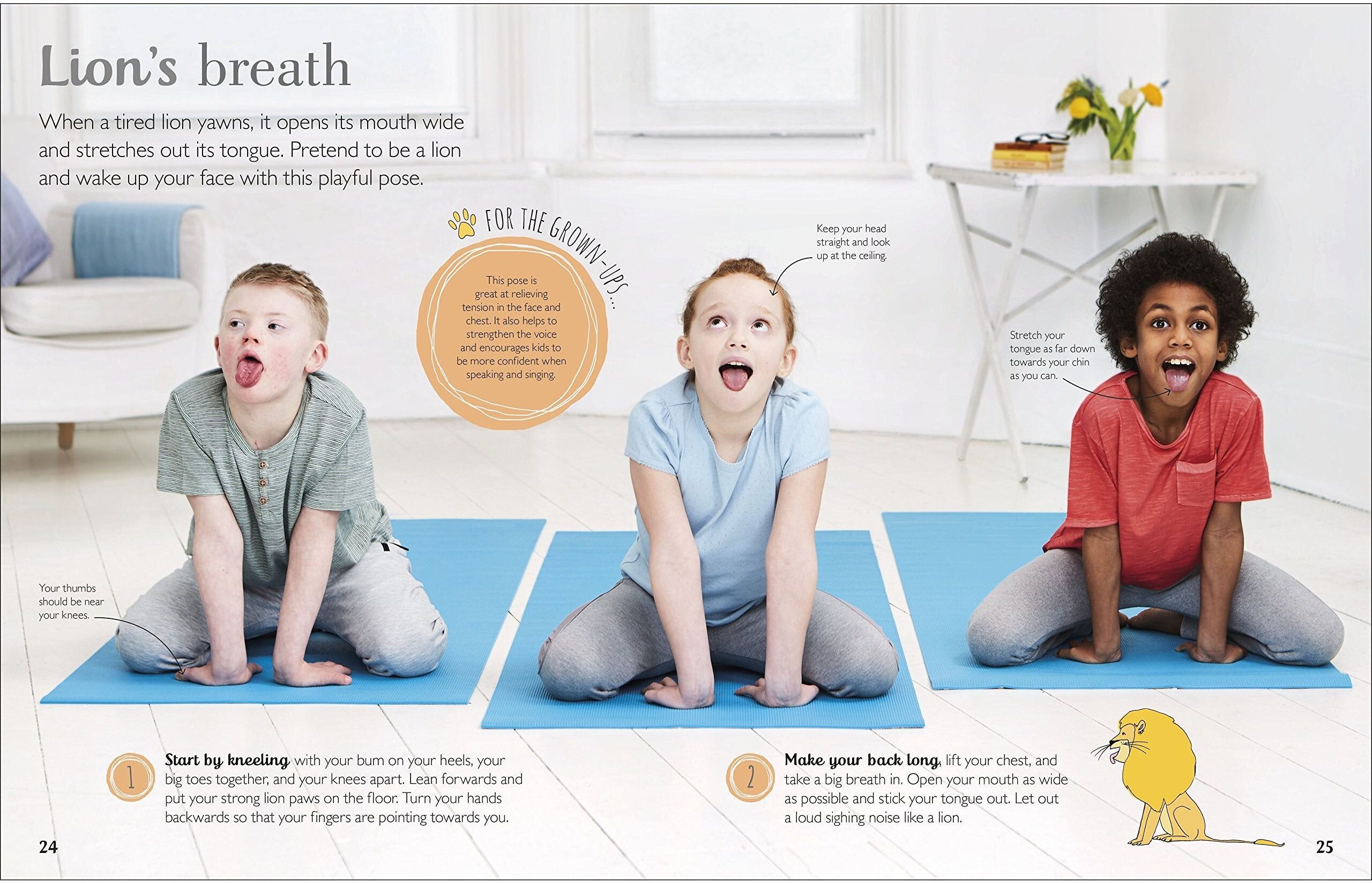
DK Yoga For Kids: Simple First Steps in Yoga and Mindfulness (Mindfulness for Kids) by Susannah HoffmanSimple first steps in yoga and mindfulness for your little one to discover!Yoga for Kids is a great way to teach your children about yoga, mindfulness, meditation and peace - whilst having fun at the same time! This all-encompassing guide includes everything you need to know about yoga for children. Encourage your child's curiosity as they explore simple variations of much-loved yoga poses, from the comfort of your own home!Dive straight in to discover:-Over 25 simple poses and yoga activities to explore-How to achieve maximum mindfulness and fun throughout each activity-Colourful illustrations and photographs showing yoga poses for kids to copy-Higher-level information allows parents to understand and ensure safety behind each poseYoga for Kids aims to teach children all about yoga and mindfulness using a strongly visual approach. Featuring exercises for the parents and children to explore independently or together, whether it's stretching into tree pose, bending into butterfly pose, succeeding with sun salutation or doing downward dog, your child can explore a series of fun and engaging yoga poses that'll keep them entertained for hours! Follow the activities presented in this yoga guide, and your little one can learn how to perfect their poses and become stronger and more confident too!The ideal yoga activity book for 6-9 year olds, this is a must-have volume for children who like moving, learning and bending! Whether you're a parent looking to encourage your child to relax, engage, focus and have fun, or you think your child may be experiencing anxiety and you're looking for a fun and mindful activity the family can enjoy together, this all-encompassing yoga book for children may be calling your name!Children's yoga expert Susannah Hoffman sets out to prove that supporting a child's positive mental health does not need to be expensive, difficult or even time-consuming.With this awe-inspiring activity book, your child can explore yoga poses that will help them de-stress and have fun at the same time!4,99 £*Shipping: 1,99 £Secure redirect to the provider
-
Uplift Essentials Colorful Solar Particle Ball Wind Chime Light Colorful Solar Particle Ball Wind Chime LightElevate your outdoor environment with a highperformance lighting solution that masterfully blends auditory charm with vibrant visual artistry. This colorful solar particle ball wind chime light is the ultimate solution for homeowners and decorators...58,97 $*Shipping: 0,00 $Secure redirect to the provider
-
What is the wave-particle duality?
Wave-particle duality is a fundamental concept in quantum mechanics that states that particles, such as electrons and photons, can exhibit both wave-like and particle-like behavior. This means that they can behave as waves, with characteristics such as interference and diffraction, and also as particles, with characteristics such as position and momentum. This duality challenges our classical understanding of particles and waves as distinct entities, and is a key aspect of understanding the behavior of matter and energy at the quantum level. **
-
Does the human have particle and wave characteristics?
Yes, humans and all matter have both particle and wave characteristics. This is known as wave-particle duality, a fundamental concept in quantum mechanics. At the quantum level, particles such as electrons and photons can exhibit wave-like behavior, as demonstrated by phenomena like diffraction and interference. This duality is a key aspect of the behavior of matter and energy at the smallest scales of the universe. **
-
Is there a timer for mindfulness training, meditation, yoga, and spirituality?
There is no set timer for mindfulness training, meditation, yoga, and spirituality as it varies from person to person. Some people may find it helpful to start with short sessions, such as 5-10 minutes, and gradually increase the duration as they become more comfortable. Others may prefer longer sessions right from the start. It's important to listen to your body and mind and find a timing that works best for you. The key is to be consistent and make it a regular practice in your daily routine. **
-
Do all quantum objects obey the wave-particle duality?
Yes, all quantum objects exhibit wave-particle duality, which means they can exhibit both wave-like and particle-like behavior. This duality is a fundamental aspect of quantum mechanics and is observed in phenomena such as the double-slit experiment, where particles exhibit interference patterns characteristic of waves. This duality is a key feature of quantum theory and is essential for understanding the behavior of quantum objects. **
Similar search terms for Wave-particle
-
17 Stories Milijan Foldable Particle Board / Chipboard Floating Desk WhiteThis trendy, wall-mounted folding desk is a perfect way to save space in small and narrow rooms. It can be quickly and easily mounted on the wall, ready to be folded out for use as a desk or kitchen table at any time. Its stylish yet understated design will look lovely in any interior. Note: Please mind that there will be nail holes on the surface of the product, please refer to photo. 17 Stories Colour: White69,99 £*Shipping: 0,00 £Secure redirect to the provider
-
17 Stories Milijan Foldable Particle Board / Chipboard Floating Desk GreyThis trendy, wall-mounted folding desk is a perfect way to save space in small and narrow rooms. It can be quickly and easily mounted on the wall, ready to be folded out for use as a desk or kitchen table at any time. Its stylish yet understated design will look lovely in any interior. Note: Please mind that there will be nail holes on the surface of the product, please refer to photo. 17 Stories Colour: Grey67,99 £*Shipping: 0,00 £Secure redirect to the provider
-
What is the difference between the wave model and the particle model?
The wave model describes light as a wave that travels through space, exhibiting properties like interference and diffraction. In contrast, the particle model views light as a stream of particles called photons that carry energy and momentum. The wave model explains phenomena like interference patterns and polarization, while the particle model helps to understand effects like the photoelectric effect and Compton scattering. Both models are used in different contexts to describe the behavior of light. **
-
In which year and with which experiment was the wave-particle duality proven?
The wave-particle duality was proven in 1927 through the famous double-slit experiment conducted by physicist Thomas Young. This experiment demonstrated that light exhibits both wave-like and particle-like properties, leading to the development of the concept of wave-particle duality in quantum mechanics. **
-
What is the difference between the wave and the particle model of light?
The wave model of light describes light as a continuous wave with properties such as wavelength, frequency, and amplitude. This model explains phenomena such as interference and diffraction. On the other hand, the particle model of light, also known as the photon model, describes light as a stream of discrete particles called photons. This model explains phenomena such as the photoelectric effect and the emission of light from atoms. The wave model is more suitable for explaining the behavior of light in certain situations, while the particle model is more suitable for explaining other phenomena. **
-
How can one imagine a photon within the framework of wave-particle duality?
Within the framework of wave-particle duality, a photon can be imagined as both a wave and a particle simultaneously. As a wave, it exhibits properties such as interference and diffraction, similar to other waves. As a particle, it carries discrete packets of energy and momentum, and can interact with matter as a discrete entity. This duality means that a photon's behavior is best described by both wave and particle characteristics, and it can exhibit wave-like behavior in some situations and particle-like behavior in others. This dual nature of a photon is a fundamental aspect of quantum mechanics. **
* All prices are inclusive of VAT and, if applicable, plus shipping costs. The offer information is based on the details provided by the respective shop and is updated through automated processes. Real-time updates do not occur, so deviations can occur in individual cases. ** Note: Parts of this content were created by AI.